
The question almost nobody asks before opening a trading account is a boring one. What are you usually doing at 9:30 on a weekday morning in New York? If you live in London, that’s 2:30 in the afternoon, and in Bucharest or Athens it’s 4:30, right around the time a lot of people are finishing work, picking up kids, or just trying to survive the last hour without another meeting.
I start there because I’ve watched too many people (myself included, a while back) treat day trading as a skill question when it’s first a schedule question. You can be sharp, curious and good with numbers, and still find out that the market opens at the exact moment your life needs you somewhere else. So when someone asks me whether Xcelerate Trade can help them figure out if day trading fits their life, my honest answer is yes, partly.
The platform gives you Academy lessons, market replay, demo trading and a trading journal, and together they let you test the fit before any real money is involved. The “partly” is about the final call, which stays with you.
The Question Behind the Question
When people ask “should I day trade?”, they’re usually asking three things at once. Can I learn this? Can I afford the losses while I learn? And can I live with it, week after week, without wrecking my sleep, my job or my mood?
The first two get most of the attention online. The third one rarely does, probably because it doesn’t sell courses. In my experience, though, it’s the one that decides who is still around after the first few months.
A good platform can help with all three, just in different ways. It can teach you the mechanics, let you practice without real money, and give you enough structure to watch yourself honestly. What it can’t do is make the call for you, and I’d be suspicious of any service that pretends it can.
What Day Trading Actually Asks of Your Day
Day trading means opening and closing positions within the same session, so you don’t carry risk overnight. On paper that sounds tidy. In practice your decisions get squeezed into minutes, sometimes seconds, and the market sets the timetable.
The Clock Doesn’t Negotiate
Every market has its busy hours. US stocks and indices like the Nasdaq 100 tend to be most liquid in the first ninety minutes after the open and again near the close. Forex has its own rhythm, and the overlap between the London and New York sessions usually brings the tightest spreads and the most movement.
Crypto trades around the clock, which people often read as freedom. I’d say it’s closer to the opposite. When a market never closes, the discipline to stop has to come entirely from you, and I’ve seen more than one person lose real sleep to a Bitcoin chart at 2 a.m.
So the first filter is almost embarrassingly simple, and you can do it tonight. Write down the hours you are actually free, not the hours you hope to be free, and lay them next to the session of the market you want to trade. If the overlap is zero, no amount of talent fixes that.
Attention Runs Out
Day trading is mentally expensive. You’re reading price, managing risk and arguing with your own impulses, all at once. Decision fatigue is a debated idea among psychologists, but anyone who has sat down to trade after a long workday knows the feeling well enough.
You arrive tired, you want something to happen, and the market is very generous with reasons to click. If I had to bet, I’d say fatigue causes more bad trades among part-time traders than lack of knowledge does. It looks like a technical problem, but it starts in your calendar.
Money You Can Genuinely Afford to Lose
Then there’s capital. In the United States, the pattern day trader rule has long required $25,000 in a margin account if you make four or more day trades within five business days. FINRA has been working on changes to that framework, so check the version in force before you build a plan around it.
In Europe, retail CFD accounts fall under leverage limits that ESMA introduced in 2018 and national regulators later adopted. That means 1:30 on major currency pairs, lower on more volatile instruments, and negative balance protection. Regulators brought those rules in after watching the same story repeat for years, which brings me to a bit of history.
A Short History of People Who Thought It Would Be Easy
Short-term speculation is old. In the early 1900s a teenage Jesse Livermore made his first money in bucket shops, betting on price moves without ever owning the stocks. He went on to make and lose several fortunes, and his life reads less like a success story and more like a long warning about temperament.
Retail day trading as we know it took off in the late 1990s. Electronic order routing, cheaper commissions and the dot-com mania pulled in a wave of people trading from home or from so-called day trading shops. When the bubble burst in 2000, many of them left with far less than they came in with, and in 2001 US regulators approved the pattern day trader rule.
Something similar happened in 2020 and 2021. Commission-free apps, lockdowns and meme stocks brought millions of newcomers in. A rising market makes almost everyone look talented for a while, and a choppy one tends to reveal who had a process and who had luck.
The Numbers Nobody Puts on the Brochure
I don’t like quoting statistics to scare people, but these are too relevant to skip. A well-known study by Brad Barber, Yi-Tsung Lee, Yu-Jane Liu and Terrance Odean looked at Taiwan, where day trading was hugely popular, and found that fewer than 1% of day traders could earn predictable profits after fees over time.
A Brazilian study published in 2019 by Fernando Chague, Rodrigo De-Losso and Bruno Giovannetti followed people who day traded mini index futures for 300 days or more. Around 97% of them lost money, and only about 1% earned more than the Brazilian minimum wage. That last detail is the one that stays with me, because it treats day trading as a job, and most of those jobs paid nothing.
In Europe, brokers that offer CFDs have to publish the share of retail accounts that lose money. Those disclosures usually land somewhere between the high sixties and the high eighties, in percentage terms, depending on the provider.
None of this means you personally will fail. It means losing is the default outcome, and a sensible decision has to start from that base rate rather than from someone’s highlight reel on social media.
Where Xcelerate Trade Fits in the Decision
This is where a structured platform starts to make sense, at least in my view. It won’t promise you results, and it shouldn’t. What it can do is let you collect evidence about yourself before real money is involved, and each part of Xcelerate Trade answers a slightly different piece of the “does this fit me” puzzle.
Learning the Vocabulary Before the Verdict
It’s hard to judge whether you’d enjoy something you don’t understand yet. The Academy starts with the basics, including the difference between trading and investing, what you need before you start, and how the team approaches market analysis. The order of those lessons matters more than it looks.
Plenty of people decide they “love trading” after a week of short videos, when what they really love is the idea of it. Working through order types, spreads, position sizing and the math of drawdowns tends to show you quickly whether you’re curious about the mechanics or just drawn to the adrenaline.
Replay as a Cheap Rehearsal
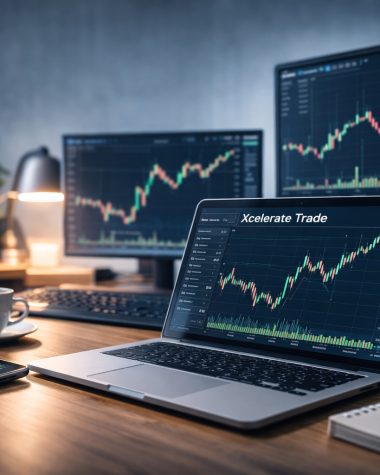
Market replay lets you move through historical price action bar by bar and make decisions as if the session were live. I think of it as a dress rehearsal. You can practice a full New York open on a Sunday afternoon, which is useful precisely because Sunday afternoon is when you actually have time.
It won’t reproduce the emotional weight of real money, and I won’t pretend otherwise. It will, however, tell you whether you can stay focused through two hours of charts, and whether the process bores you or pulls you in. Both answers are worth having.
Demo Trading During Your Real Hours
Here’s where the lifestyle test gets serious. A demo account on Xcelerate.Trade lets you trade live market conditions with virtual funds, and I’d insist on using it during the hours you’d really trade. Quiet weekends and vacation days don’t count here. Normal weekdays, with your normal obligations, do.
Only then do you find out whether the 2:30 p.m. London slot or the 4:30 p.m. Bucharest slot really survives your commute, your family dinner and your energy levels. It’s also where many people quietly realize the answer is no, which is a perfectly good result that cost them nothing.
When I went through the material on Day Trading Strategies, what I liked most was the focus on frameworks you can test and also skip. An opening range breakout, for example, comes with conditions for when you shouldn’t trade at all, such as major news releases or messy early price action. That skip rule is surprisingly lifestyle-friendly, because it gives you permission to walk away from a bad session instead of forcing trades just to justify the hour you set aside.
Watching Other Traders Without Copying Blindly
Copy trading is another feature people tend to misread. Following experienced traders can show you how they manage risk, how often they actually trade and how they sit through losing streaks. Used that way, it’s a learning tool.
Used as a shortcut, it becomes something else entirely. If you copy positions you don’t understand, you learn nothing about whether day trading suits you, because you’ve handed off the exact part you were supposed to test.
The Lifestyle Audit I Wish I’d Done Earlier
Before anyone spends a cent, I think it’s worth sitting down with a notebook for twenty minutes. No platform can do this bit for you, although the trading journal on Xcelerate Trade makes it easier to keep the habit going once you start.
Your Calendar
Look at a normal week, then at a bad one. When does work spill over, when do the kids get sick, when do you travel? Day trading punishes inconsistency, because a strategy needs repetition before it can tell you anything, and one you can only run twice a week takes months to evaluate.
If your job is flexible and your free hours line up with a liquid session, that’s a genuine advantage. If your only window is late at night, crypto or Asian sessions might be possible, but be honest with yourself about what that does to your sleep and your mornings.
Your Temperament
Some people shrug off small, frequent losses. Others take each one personally and want it back right away, which is exactly how revenge trading starts. You probably already know which type you are from other parts of your life, whether that’s sports, poker, negotiating or sitting in traffic.
A trick that helped me was adding two columns to my journal, one for how I felt before each trade and one for whether I followed my plan. After a few weeks, patterns showed up that the profit and loss figure never would have revealed. Mine were a little humbling, since my worst decisions clustered in the last half hour of a session, when I was tired and slightly bored.
Your Household
This one gets skipped constantly. If you share finances with a partner, they’re part of this decision whether you mention it or not. If your kids need you at 4 p.m., the market won’t wait.
I’d have that conversation early and agree on a clear number you’re both comfortable losing. It’s a much easier talk before the first drawdown than after it.
A 30-Day Test That Tells You More Than Any Quiz
Online quizzes asking “Are you a day trader?” are mostly marketing. What I’d suggest instead is a month-long experiment you run on yourself, using tools you already have.
In the first week, work through the introductory Academy lessons and pick one market that trades during your free hours. Just one. Most beginners spread themselves across forex, indices and crypto at the same time, and then can’t tell which variable caused their results.
In the second week, use replay for at least five sessions of that market, at the same time of day you’d trade live. Journal every decision, including the trades you chose not to take. If you catch yourself skipping sessions because they feel like homework, write that down too, since it’s data about fit.
For weeks three and four, move to the demo account during real market hours. Size your positions as if you were trading the amount you actually plan to deposit, not a fantasy balance, and risk a small fixed share per trade, with 1% being a common starting point. Note your mood, your energy and whether the session collided with anything else in your life.
At the end of the month, look at three things before you even glance at profit. How many sessions did you actually show up for, and how often did you follow your own rules?
Then ask how you felt on trading days compared with the days you didn’t trade. If those answers look shaky, the profit figure hardly matters.
When the Honest Answer Is No
Maybe you run the test and find the timing never works, or that you end every session wired and irritable. That isn’t a failure, and I’d go further and call it the most useful outcome a free test can give you.
I know people who discovered that what they enjoyed was the analysis and research, far more than the rapid-fire execution. They ended up happier as swing traders or long-term investors, checking charts once a day or once a week. Picking the style that fits your life is simply good judgment.
Swing Trading, Investing and the Space in Between
Day trading is only one way to engage with markets. Swing trading holds positions for several days or weeks, so you can make decisions in the evening, place your orders and go to bed. You accept overnight and weekend risk in exchange for a far calmer schedule.
Investing stretches the horizon further still, to months or years, and focuses more on the business or asset than on intraday price swings. The Academy lesson on trading versus investing is a good place to think this through, because in the end the distinction is about how you want to spend your attention.
Plenty of people land on a mix. They keep a long-term portfolio they barely touch, plus a small trading account for learning and testing ideas. That setup keeps the curiosity alive without making the household budget depend on a five-minute chart.
What the Platform Can’t Decide for You
Xcelerate.Trade can give you structure, practice and an honest record of your own decisions. It can shorten the time it takes to find out whether you’re interested in day trading itself or only in the picture of it. That’s real value, and I’d much rather people get their answer in a demo account than in their savings account.
The final call still sits with you, and it depends on things no platform can see, like your job, your family, your stress and your sleep. If you let a month of honest practice guide that call, you’ll probably make a better one than most people who jump in on a hunch.
Trading carries significant risk, and nothing here is financial advice. If you’re unsure how any of this applies to your situation, talk to a licensed professional before you commit money.
Frequently Asked Questions
Can Xcelerate Trade tell me whether I’m suited to day trading?
Not directly, and no platform honestly can. What Xcelerate Trade gives you is a way to test yourself, through Academy lessons, market replay, demo trading during your real hours and a journal that records how you behave. The answer comes from the evidence you collect, not from a questionnaire.
How much time do I need each day to day trade?
Most people who day trade stocks or indices focus on one to two hours around the market open, plus some preparation beforehand and a short review afterward. The key point is that those hours are fixed by the market. If your free time doesn’t overlap with a liquid session on most weekdays, day trading will be hard to sustain.
Can I day trade while working a full-time job?
Some people do, usually because their time zone or job gives them a free window during an active session. In Central and Eastern Europe, for example, the US open falls in the late afternoon, which can work for people who finish early. Testing that window in demo for a few weeks will tell you far more than any general rule.
Is a demo account enough to know whether day trading fits me?
It’s enough to answer the schedule and discipline questions, which matter a lot. It won’t fully show how you react when real money is at risk, so many traders move to a very small live account after a solid demo period, keeping risk per trade tiny while they adjust.
What is the lifestyle difference between day trading and swing trading?
Day trading needs your attention during specific market hours and closes everything by the end of the session. Swing trading holds positions for days or weeks, so decisions can be made in the evening, at the cost of overnight and weekend risk. People with rigid jobs or young children often find swing trading easier to live with.
How much money do I need to start day trading?
It depends on the market and your jurisdiction. US stock day traders in margin accounts have long faced the $25,000 pattern day trader requirement, although that framework has been under review, while forex and CFD accounts can be opened with much less. Whatever the minimum, only trade money you could lose without affecting your household.
Is crypto day trading easier to fit into a busy schedule?
Crypto markets never close, so in theory you can trade whenever you’re free. In practice the lack of a closing bell makes it harder to stop, and liquidity and volatility shift a lot through the day. Set fixed trading hours for yourself and treat them as seriously as you would a stock market session.